
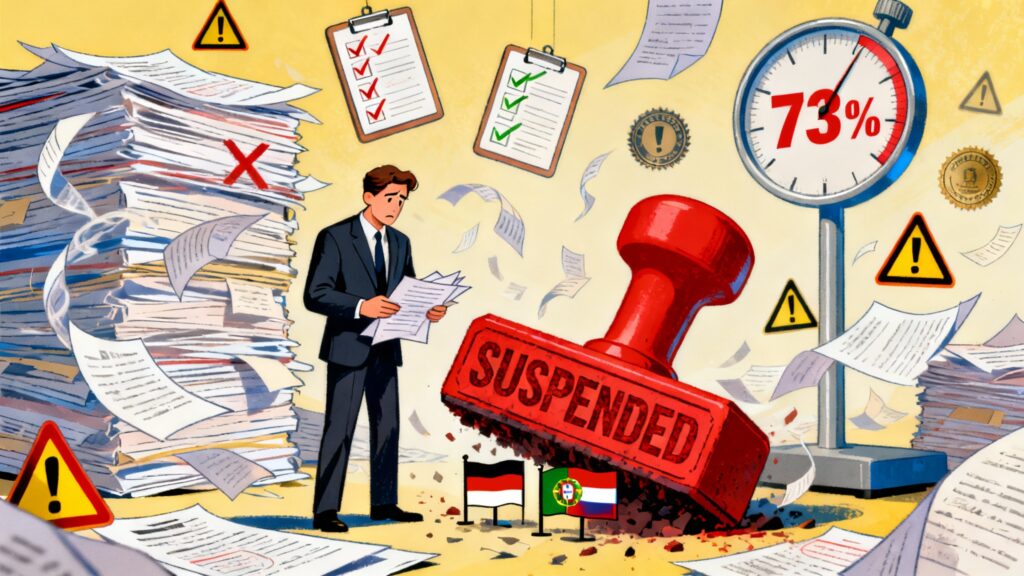
Picture this: You’ve just invested €500,000 into your dream cannabis operation. The paperwork is filed, the facility is ready, and then… BOOM. A compliance violation notice lands in your inbox. Your license is suspended faster than you can say «regulatory nightmare.»
This scenario is becoming increasingly common across Europe’s evolving cannabis landscape. While we don’t have exact suspension rates, what we do know is alarming: cannabis compliance violations are on the rise, and the costs are devastating for unprepared operators.
The cannabis industry’s regulatory landscape might seem like navigating a minefield blindfolded, but it doesn’t have to be.
1. The Great European Cannabis Compliance Challenge
The Numbers Paint a Concerning Picture
Let’s start with some real statistics that should grab your attention. According to the European Union Agency for Drugs (EUDA), cannabis remains the most widely consumed illicit drug in Europe, with 8.4% of European adults (24 million people) using it annually.
The EU cannabis market is valued at at least €12.1 billion, making it the largest share of the overall illicit drug retail market. With numbers this big, regulatory scrutiny is intense and growing.
Cannabis accounts for over one-third of all drug treatment admissions in Europe. This statistic alone shows regulators are paying close attention to every aspect of the cannabis supply chain.
Why Compliance Failures Are Increasing
The cannabis compliance landscape changes faster than social media trends. Regulations that were valid last month might be obsolete today. Most operators are playing catch-up with rules that seem designed by people who’ve never worked in the industry.
European regulators are notoriously detail-oriented across all industries. They want every ‘t’ crossed and every ‘i’ dotted in triplicate. Miss one quarterly report deadline? Investigation. Forget to update your security protocols? Violation. The regulatory framework is unforgiving.
The problem isn’t just complexity; it’s inconsistency. What’s acceptable in one EU country might be problematic in another. Cannabis regulations vary dramatically between member states, creating a patchwork of requirements that’s difficult to navigate.
The Domino Effect of Non-Compliance
When compliance issues arise, they create ripple effects throughout the entire supply chain. Distributors lose suppliers, retailers lose products, and patients lose access to medicine. It’s a compliance catastrophe that affects everyone involved.
Banks become nervous about cannabis-related accounts. Insurance companies review policies more carefully. Employees worry about job security, and investors lose confidence. What starts as a minor paperwork error can become an existential crisis.
The reputational damage alone can take years to recover from. In an industry already fighting stigma, a compliance violation is like wearing a scarlet letter in business meetings.
2. Country-Specific Regulatory Landscapes
Germany: The Precision Machine
Germany’s approach to cannabis regulation reflects their legendary attention to detail. The country has recently moved toward partial legalization, but with strict regulatory frameworks that require meticulous compliance.
German authorities don’t mess around with documentation. They conduct thorough inspections with military precision. Every aspect of your operation needs to be documented, tracked, and reported according to their exacting standards.
The German system requires extensive record-keeping that goes beyond basic inventory tracking. You need comprehensive documentation covering everything from seed sourcing to final product distribution, with regular audits to ensure accuracy.
Netherlands: The Complex Tolerance System
The Netherlands has a unique «tolerance policy» that creates regulatory complexity. While cannabis is technically illegal, it’s tolerated under specific circumstances, creating a gray area that operators must navigate carefully.
The Dutch system involves multiple levels of government – municipal, provincial, and national – each with different requirements. Amsterdam’s rules differ from Rotterdam’s, which differ from other municipalities across the country.
Recent policy changes have added new layers of complexity. The licensing system requires operators to work with different authorities simultaneously, each with their own timelines, requirements, and fee structures.
Portugal: Strict Medical Framework
Portugal decriminalized personal use but maintains strict controls on commercial operations. The country’s medical cannabis program requires extensive compliance with pharmaceutical-grade standards.
INFARMED, Portugal’s health authority, enforces rigorous quality control standards. Their inspection processes are comprehensive, covering everything from cultivation practices to final product labeling and distribution.
The Portuguese system requires annual license renewals with complete documentation reviews. It’s not just updating information – operators essentially go through a new application process each year.
3. The Most Common Compliance Pitfalls
Documentation and Record-Keeping Failures
Poor record-keeping is consistently cited as a major compliance issue across European cannabis markets. Regulators expect real-time documentation of every transaction, every gram, and every movement within your operation.
Seed-to-sale tracking requirements are particularly challenging. You need to document cultivation stages, processing steps, quality control measures, and distribution chains. Missing documentation can trigger investigations and potential violations.
Digital systems can fail, employees forget to log activities, and software updates sometimes corrupt data. Having robust backup systems and redundant documentation processes is essential for maintaining compliance.
Security and Safety Protocol Issues
European cannabis facilities must meet stringent security standards. Multiple camera angles, motion sensors, alarm systems, and 24/7 monitoring are typically required across different jurisdictions.
Security systems must be maintained continuously. Camera malfunctions, system downtime, or gaps in coverage can result in compliance violations. Regular maintenance and immediate repair protocols are crucial.
Access control systems must track every person entering and leaving facilities. Employee background checks, visitor logs, and security clearances require ongoing management and regular updates.
Financial Reporting and Tax Compliance
Cannabis businesses face unique financial reporting requirements that differ from traditional industries. Every transaction must be properly documented, categorized, and reported to relevant authorities.
Tax compliance varies significantly between countries and can change frequently. What’s deductible in one jurisdiction might not be in another. Professional accounting expertise specific to cannabis regulations is essential.
Banking relationships require careful management. Many traditional banks remain cautious about cannabis-related accounts, requiring additional documentation and compliance measures for financial transactions.
4. Building Your Compliance Strategy
Creating a Compliance-First Culture
Successful cannabis operations don’t just hire compliance officers – they build compliance into their company culture. Every employee needs to understand their role in maintaining regulatory compliance.
Your team should include dedicated compliance professionals, legal counsel familiar with cannabis regulations, and specialized accountants. Cannabis compliance requires experts who understand the unique challenges of this industry.
Regular training keeps everyone updated on changing requirements. Monthly compliance meetings, quarterly reviews, and annual audits should be standard practice. Make compliance as routine as daily operations.
Technology and Systems Integration
Modern compliance software can automate much of the record-keeping that creates problems for operators. Integrated tracking systems, automated reporting tools, and cloud-based platforms can reduce human error significantly.
Real-time monitoring systems provide immediate alerts when issues arise. When inspectors arrive, you can access any required record instantly. No more scrambling through filing cabinets or explaining system failures.
System integration is crucial. Your inventory management should connect seamlessly with your compliance reporting platform. Disconnected systems create gaps where violations can hide.
Proactive Monitoring and Auditing
The best compliance strategy involves staying ahead of regulatory changes. Subscribe to regulatory updates, join industry associations, and maintain relationships with regulatory agencies when possible.
Regular internal audits can identify potential issues before they become violations. Consider hiring external compliance consultants for quarterly reviews. Fresh perspectives often spot problems that internal teams miss.
Document everything thoroughly. When in doubt, create a record. Over-documentation might seem excessive, but under-documentation can be catastrophic during inspections or audits.
Protect Your Cannabis Business with Reliable Supply Partners
The European cannabis industry is growing rapidly, but regulatory compliance isn’t optional – it’s essential for survival. Whether you’re cultivating, processing, or distributing, working with compliant suppliers protects your entire operation.
Looking for premium cannabis flower exports that meet strict EU compliance standards? Our carefully cultivated flowers come with complete documentation, quality certifications, and full regulatory compliance support to keep your business running smoothly.
[Contact Us for Premium Cannabis Flower Exports] – Because your supply chain deserves partners who understand both quality cultivation and regulatory compliance.
Serving licensed operators across Europe with reliable, compliant cannabis flower exports that meet the highest industry standards.
 Spanish
  English