
Your friendly guide to navigating the green revolution that’s reshaping industries worldwide
1. Understanding the Core Differences Between Medical and Recreational Cannabis
Chemical Composition: The Science Behind the Buzz
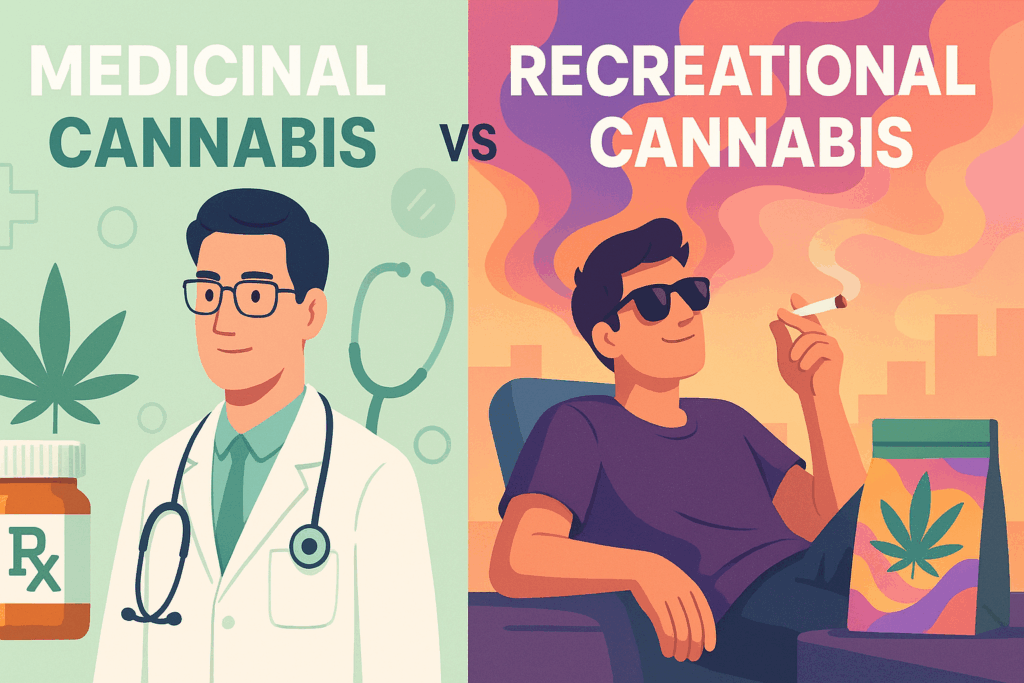
Let’s dive into what makes medical and recreational cannabis tick differently. Medical cannabis typically contains higher CBD levels and lower THC concentrations. This creates therapeutic effects without the intense psychoactive experience.
Recreational cannabis flips this script entirely. It’s bred for higher THC content to maximize that euphoric feeling users seek. Think of it as the difference between a gentle massage and a roller coaster ride.
The terpene profiles also vary significantly between these two categories. Medical strains focus on specific terpenes that enhance healing properties. Myrcene promotes relaxation, while limonene boosts mood and reduces anxiety.
Recreational varieties prioritize terpenes that enhance the overall experience. They’re designed to create memorable moments rather than target specific ailments. It’s like choosing between a precision tool and a party favor.
Quality control standards differ dramatically between medical and recreational products. Medical cannabis undergoes rigorous testing for pesticides, heavy metals, and microbials. Every batch must meet pharmaceutical-grade standards before reaching patients.
Recreational products follow less stringent guidelines in many jurisdictions. While still regulated, the focus shifts from medical efficacy to consumer safety. This doesn’t mean recreational cannabis is unsafe, just held to different standards.
Intended Use and Patient Demographics
Medical cannabis serves patients dealing with chronic pain, epilepsy, and cancer symptoms. These individuals aren’t seeking a high; they’re pursuing relief from debilitating conditions. Their relationship with cannabis is purely therapeutic and often life-changing.
Recreational users approach cannabis for relaxation, creativity, or social enhancement. They’re looking to unwind after work or enhance social gatherings. The motivation is pleasure-seeking rather than symptom management.
Dosing approaches reflect these different intentions perfectly. Medical users follow precise dosing schedules prescribed by healthcare professionals. They track symptoms, adjust doses, and maintain detailed consumption logs.
Recreational consumers take a more casual approach to dosing. They might start low and go slow, but flexibility rules their experience. There’s no medical professional guiding their journey or monitoring their progress.
Age demographics show interesting patterns between these user groups. Medical cannabis patients span all age ranges, including elderly populations. Many seniors discover cannabis later in life for arthritis or sleep issues.
Recreational users skew younger, though this is changing as stigma decreases. Baby boomers are increasingly exploring cannabis for fun, not just medicine. The generation that coined «turn on, tune in, drop out» is returning.
Product Formulations and Delivery Methods
Medical cannabis products prioritize precise dosing and consistent effects. Tinctures, capsules, and patches offer controlled delivery systems. Patients need predictable results to manage their conditions effectively.
Sublingual strips and suppositories provide targeted relief for specific symptoms. These delivery methods bypass the digestive system for faster onset. Medical innovation drives these specialized formulation developments.
Recreational products focus on enjoyable consumption experiences. Edibles come in countless flavors, from gummy bears to artisanal chocolates. The goal is making consumption pleasant and socially acceptable.
Vaporizers and pre-rolls dominate the recreational market for good reason. They offer immediate effects and social sharing opportunities. The ritual of consumption becomes part of the overall experience.
Medical cannabis often requires higher CBD ratios for therapeutic benefits. Products might contain 20:1 CBD to THC ratios or higher. These formulations minimize psychoactive effects while maximizing healing potential.
Recreational products typically feature balanced or THC-dominant ratios. Users want to feel the effects, not just receive subtle benefits. The psychoactive component is a feature, not a bug to avoid.
2. Health Benefits and Therapeutic Applications
Evidence-Based Medical Applications
Scientific research supports cannabis use for numerous medical conditions. Epilepsy treatment shows remarkable success rates, particularly in pediatric patients. Charlotte’s Web strain revolutionized childhood epilepsy treatment and changed public perception forever.
Chronic pain management represents cannabis medicine’s most widespread application. Studies demonstrate significant pain reduction in arthritis, fibromyalgia, and neuropathic conditions. Patients often reduce opioid dependence when incorporating medical cannabis protocols.
Cancer patients benefit from cannabis in multiple ways beyond pain relief. Chemotherapy-induced nausea and vomiting respond well to cannabinoid therapy. Appetite stimulation helps patients maintain nutrition during challenging treatment periods.
PTSD and anxiety disorders show promising treatment outcomes with medical cannabis. Specific strains help regulate sleep patterns and reduce nighttime terrors. Veterans increasingly turn to cannabis when traditional medications prove inadequate.
Multiple sclerosis patients experience reduced muscle spasticity with cannabis treatment. The FDA-approved Epidiolex demonstrates cannabis medicine’s mainstream medical acceptance. This pharmaceutical-grade CBD product treats rare epilepsy forms effectively.
Glaucoma patients have used cannabis for decades to reduce intraocular pressure. While not a cure, cannabis provides symptom relief and comfort. Ongoing research explores cannabis applications for neurodegenerative diseases like Alzheimer’s.
Mental Health and Wellness Benefits
Cannabis affects mental health in complex ways that researchers continue studying. Low-dose THC can reduce anxiety in some individuals effectively. However, higher doses might increase anxiety in sensitive users.
CBD shows particular promise for anxiety and depression treatment. Unlike THC, CBD doesn’t produce psychoactive effects while providing therapeutic benefits. Many users report improved mood and reduced stress levels.
Sleep disorders respond well to certain cannabis strains and formulations. Indica-dominant varieties typically promote relaxation and deeper sleep cycles. Patients with insomnia often find relief without pharmaceutical sleep aids.
Social anxiety decreases for many users in appropriate settings and doses. Cannabis can facilitate social connections and reduce inhibitions naturally. However, individual responses vary significantly based on personal tolerance levels.
Creativity enhancement represents a commonly reported benefit among recreational users. Many artists, writers, and musicians credit cannabis with inspiring breakthrough moments. The altered perspective can unlock new creative pathways and ideas.
Stress reduction remains one of cannabis’s most appreciated effects universally. Both medical and recreational users report significant stress relief. The endocannabinoid system plays crucial roles in stress response regulation.
Potential Risks and Side Effects
Short-term side effects include dry mouth, red eyes, and increased appetite. These effects are generally mild and temporary for most users. Staying hydrated and using eye drops can minimize these discomforts.
Cognitive impairment occurs during acute intoxication, affecting memory and concentration. Driving or operating machinery becomes dangerous under cannabis influence. Users must plan accordingly and avoid risky activities while impaired.
Long-term heavy use may lead to cannabis use disorder. Approximately 9% of users develop dependence, though it’s less severe than alcohol or opioid addiction. Withdrawal symptoms are typically mild but can include irritability and sleep disturbances.
Respiratory issues can develop from smoking cannabis regularly over time. Vaporizing or consuming edibles eliminates these risks while preserving therapeutic benefits. Many medical patients choose non-smoking consumption methods for this reason.
Mental health risks exist for predisposed individuals, particularly regarding psychosis. High-THC products may trigger episodes in vulnerable populations. Medical supervision becomes crucial for patients with psychiatric histories.
Drug interactions occur with certain medications, particularly blood thinners and seizure medications. Patients must consult healthcare providers before combining cannabis with prescription drugs. Proper medical oversight prevents dangerous interactions and optimizes treatment outcomes.
3. Legal Landscape and Regulatory Framework
Federal vs. State Cannabis Laws
The federal government still classifies cannabis as a Schedule I controlled substance. This creates a complex legal maze that businesses and consumers navigate daily. Federal prohibition conflicts with state legalization efforts across the country.
State laws vary dramatically from complete prohibition to full legalization. Some states allow only medical use while others embrace recreational markets. This patchwork creates confusion for travelers and interstate commerce challenges.
Banking remains problematic due to federal prohibition despite state legalization. Most banks avoid cannabis businesses to prevent federal regulatory issues. Cash-heavy operations create security risks and complicate normal business operations.
Interstate commerce faces significant legal hurdles under current federal law. Products legal in one state become contraband when crossing borders. This fragmentation prevents efficient national market development and increases costs.
Federal enforcement priorities have shifted under different presidential administrations. The Cole Memorandum provided guidance but lacked permanent legal protection. Policy changes create uncertainty for legitimate state-licensed cannabis businesses.
Congressional attitudes are evolving as more states embrace cannabis legalization. Bipartisan support grows for banking reform and federal rescheduling efforts. The SAFE Banking Act represents progress toward resolving federal-state conflicts.
Professional Licensing and Compliance Requirements
Cannabis businesses face extensive licensing requirements that vary by jurisdiction. Applications often require detailed security plans, financial disclosures, and operational procedures. The process can take months or years to complete successfully.
Compliance costs represent significant operational expenses for cannabis businesses. Seed-to-sale tracking systems monitor every plant from cultivation to consumer purchase. These systems prevent diversion but add complexity and expense.
Professional licensing extends beyond business owners to include key employees. Budtenders, cultivators, and managers often require individual licenses or certifications. Background checks and ongoing education requirements are common across jurisdictions.
Quality control testing requirements ensure product safety and potency accuracy. Third-party laboratories test for pesticides, heavy metals, and cannabinoid content. These tests protect consumers but add time and cost to product development.
Advertising restrictions limit how cannabis businesses can market their products. Many jurisdictions prohibit advertising near schools or on public transportation. Social media platforms often restrict cannabis-related content regardless of legality.
Record-keeping requirements are extensive and must be maintained for years. Every transaction, transfer, and disposal must be documented meticulously. Regulatory inspections can occur without notice, making compliance crucial for survival.
Workplace Policies and Employment Law
Workplace drug testing policies create challenges in cannabis-legal jurisdictions. Employers can still prohibit cannabis use and test employees regularly. Current testing methods can’t distinguish between recent use and impairment.
Medical cannabis patients face particular employment challenges despite legal protections. Some states protect medical users from employment discrimination while others don’t. Federal contractors often maintain zero-tolerance policies regardless of state laws.
Safety-sensitive positions typically maintain strict cannabis prohibition policies. Transportation, healthcare, and manufacturing jobs often require drug-free workplaces. These restrictions exist even in fully legal cannabis states.
Impairment detection remains a significant challenge for employers and law enforcement. Unlike alcohol, no reliable roadside test exists for cannabis impairment. This creates liability concerns for employers and safety risks.
Workers’ compensation issues arise when employees use medical cannabis. Some states require coverage for medical cannabis as legitimate treatment. Others exclude cannabis-related treatments from workers’ compensation benefits entirely.
Professional licenses in healthcare, law, and other fields face cannabis-related restrictions. State licensing boards may discipline professionals for cannabis use. These policies often lag behind changing cannabis laws and social attitudes.
4. Industry Trends and Future Outlook
Market Growth and Economic Impact
The legal cannabis industry generates billions in annual revenue across legalized states. Tax revenue funds education, infrastructure, and social programs in many jurisdictions. Colorado alone has collected hundreds of millions in cannabis tax revenue.
Job creation in the cannabis industry spans cultivation, manufacturing, and retail sectors. Ancillary businesses like security, legal services, and consulting also benefit significantly. The industry employs hundreds of thousands of people nationwide.
Investment capital flows into cannabis businesses despite federal banking restrictions. Private equity and venture capital firms increasingly view cannabis as legitimate investment opportunities. Public cannabis companies trade on major stock exchanges internationally.
Market consolidation accelerates as larger companies acquire smaller operators. Multi-state operators expand their footprints through strategic acquisitions and partnerships. This trend mirrors other industries transitioning from prohibition to regulation.
Product innovation drives market expansion beyond traditional flower consumption. Beverages, topicals, and wellness products attract new consumer demographics. Technology integration improves cultivation efficiency and product consistency across operations.
International markets present enormous growth opportunities for cannabis companies. Canada’s federal legalization created a template for other nations. European medical cannabis markets are expanding rapidly with significant revenue potential.
Technological Innovations and Research
Cultivation technology advances improve yield, quality, and consistency dramatically. LED lighting systems reduce energy costs while optimizing plant growth. Automated systems monitor environmental conditions and adjust parameters in real-time.
Extraction technology produces increasingly pure and potent cannabis concentrates. CO2 extraction preserves terpenes while removing unwanted compounds effectively. New methods create products impossible with traditional cultivation and processing.
Genetic research unlocks cannabis plant potential through selective breeding programs. Scientists identify specific genes responsible for cannabinoid and terpene production. This knowledge enables targeted breeding for desired therapeutic or recreational effects.
Nanotechnology enhances bioavailability and onset times for cannabis products. Nano-emulsification makes cannabinoids water-soluble for faster absorption rates. These innovations improve product effectiveness and user experience significantly.
Testing technology becomes more sophisticated and accurate over time. Mass spectrometry identifies trace contaminants and precise cannabinoid profiles. Rapid testing methods reduce turnaround times while maintaining accuracy standards.
Delivery technology explores new consumption methods beyond traditional smoking and edibles. Transdermal patches provide controlled, long-lasting effects for medical patients. Inhalation devices offer precise dosing without combustion-related health risks.
Social Equity and Criminal Justice Reform
Social equity programs address historical injustices caused by cannabis prohibition. These initiatives prioritize licensing for communities disproportionately affected by enforcement. Expungement programs clear criminal records for non-violent cannabis offenses.
Criminal justice reform reduces incarceration rates for cannabis-related offenses. Resources shift from enforcement to regulation and public health approaches. Police departments redirect efforts toward serious crimes instead of cannabis possession.
Community reinvestment programs fund education, healthcare, and economic development. Cannabis tax revenue supports programs in communities harmed by prohibition. These investments help repair decades of discriminatory enforcement policies.
Minority business participation increases through targeted support and mentorship programs. Access to capital and technical assistance helps level the playing field. Diversity in cannabis business ownership reflects broader social justice goals.
Restorative justice approaches help individuals transition from illegal to legal markets. Job training and placement programs provide legitimate employment opportunities. These efforts reduce recidivism while supporting community economic development.
Public health approaches replace punitive policies for cannabis use disorders. Treatment and harm reduction services replace incarceration for problematic use. This shift recognizes addiction as a health issue rather than criminal behavior.
The cannabis industry continues evolving rapidly as laws change and social acceptance grows. Whether you’re a healthcare professional, business owner, or curious consumer, staying informed about these developments is crucial. The green revolution is just beginning, and understanding these key differences will help you navigate this exciting new landscape successfully.
 Spanish
  English